Traffic arrives in bursts
A campaign, product drop, or viral moment can put far more load on storefront, cart, and checkout than normal traffic.
E-commerce platforms depend on storefront, checkout, order, catalog, and integration paths that need to remain understandable as traffic and complexity grow.
Talk to an expert
Environment standards, Terraform-backed infrastructure, access hygiene, deployment guardrails, and operational documentation.
Explore the service
Monitoring coverage, alert routing, dashboards, and clearer incident handling around storefront, checkout, and order paths.
Explore the service
Measurement and prioritisation across infrastructure, application, and database or query surfaces when customer-facing paths show pressure.
Explore the service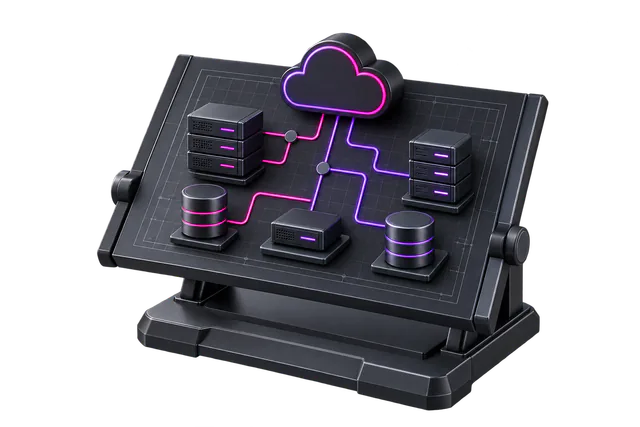
Target architecture, integration design, multi-account model, and a decision roadmap for an evolving commerce platform.
Explore the service
Practical support for access, delivery controls, backup hygiene, recovery expectations, and evidence for security review.
Explore the serviceFor cost ownership and optimisation work once the relevant workloads are understood.
Explore the serviceFor recovery objectives, failover testing, or continuity evidence that needs explicit design.
Explore the serviceFor a migration decision, target environment, or delivery plan grounded in a defined technical scope.
Explore the serviceFor a defined commerce automation or assistance use case, when data, permissions, and operating foundations are ready.
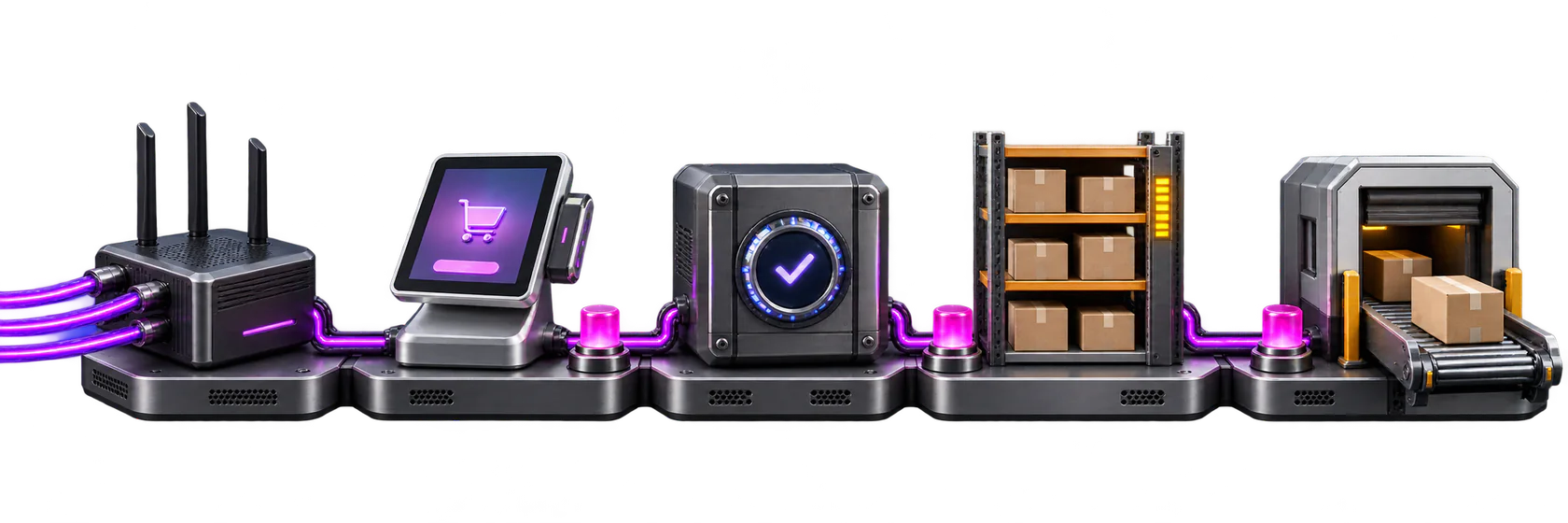
Explore the serviceThe same customer outcome relies on every handoff working at the right time, with enough evidence to understand what happened when it does not.
A campaign, product drop, or viral moment can put far more load on storefront, cart, and checkout than normal traffic.
Payment, stock, tax, and order services have to respond together. One slow dependency can delay the customer path.
Concurrent checkouts and delayed updates can leave the platform selling stock that is no longer available, or holding stock it could sell.
Payment callbacks, warehouse updates, marketplaces, and ERP events can arrive late, twice, or out of order.
Bots, credential stuffing, scraping, and abusive API calls add load while real customers try to buy.
Signals are spread across the storefront, cloud services, security controls, and third parties. The team needs to know where the flow broke and what can recover safely.
Look at one path, such as checkout, stock, order confirmation, or a partner handoff, and see what is actually failing.
Improve the specific part of the platform causing the problem, whether that is performance, security, architecture, or resilience.
Take on cloud operations and on-call support when the platform needs continuous technical ownership.
Identify the customer journey with a real commercial consequence, whether that is checkout, stock reservation, order confirmation, or a partner handoff.
Make the dependencies, operating signals, owners, failure states, and recovery controls visible enough to understand what is happening.
Decide whether the platform needs operating control, performance work, architecture, security, resilience, or no further project yet.
Use this when the immediate question is how to make operating signals more useful across critical application and integration paths.
Read the guide →Use this when a migration-specific constraint, decision, or cloud funding conversation is part of the platform review.
Read the guide →