
Your
Trusted
Get Fully AWS Funded
Cloud Migration
Cloud Migration

A1: No. A monorepo puts multiple parts of a codebase in one repository. Development orchestration coordinates a product that remains split across repositories without moving their code into one place.
A2: No. Tickets, source-control platforms, code ownership, and CI keep doing their normal jobs. The orchestration layer connects their repository-level outputs to a product-level feature flow.
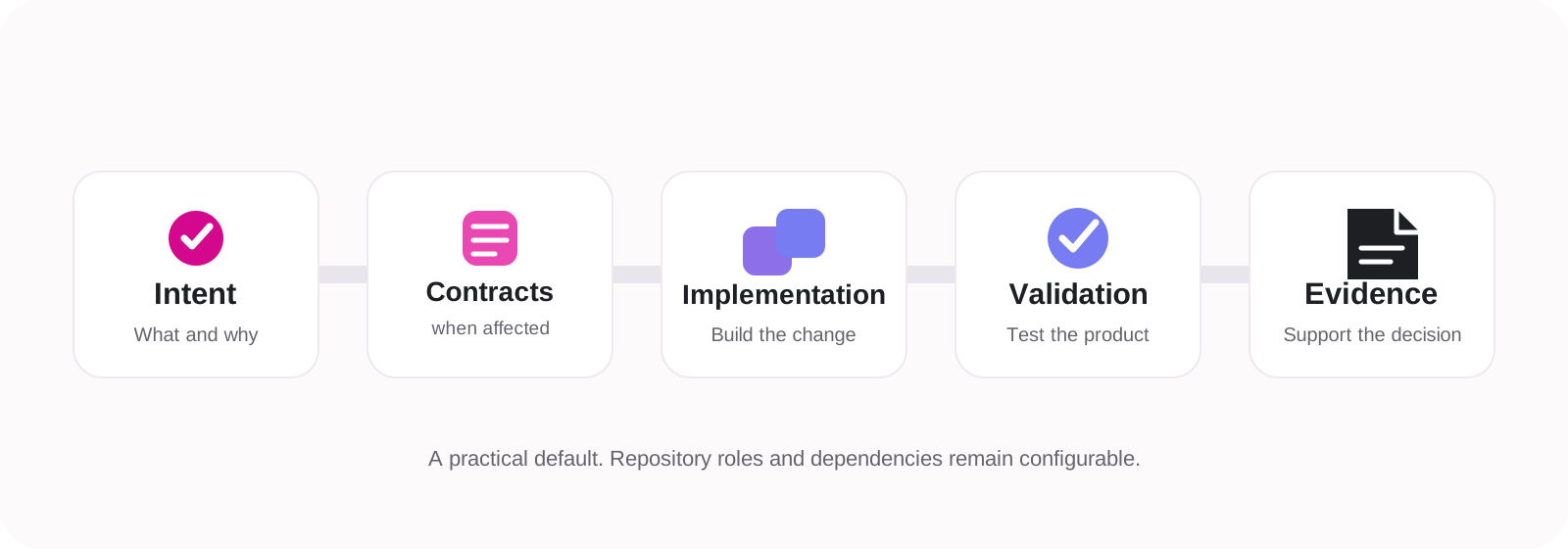
A3: No. The default order is a starting point. Independent implementations can run in parallel, and features that do not affect a contract can skip that stage.
A4: Yes. Each human or agent can be given a clear repository, stage, and handoff while the product-level state remains visible and authority stays bounded.
A5: Map one product, then run one representative cross-repository feature through the proposed stages before expanding the approach.